 Phil Leggetter
New Relic Metrics, Quick Filters, CLI v1.3.0 & Outpost Standard Webhooks - Hookdeck November 2025
Hookdeck's November 2025 updates brought New Relic integration for metrics, quick filters for event discovery, CLI local project pinning, GCP Service Account authentication, new source types including Chargebee with integration guides, and Outpost releases with Standard Webhooks support.
New Relic Export: Complete Observability Integration
New Relic integration exports metrics directly through the New Relic Metrics API, joining existing Datadog and Prometheus integrations. Metrics include:
- Request rates (total, accepted, rejected)
- Event processing statistics (total, successful, failed, ignored)
- Delivery attempts (total, delivered, failed)
- Queue depth per destination
- Average response latency
Each metric includes attributes for team, organization, source, connection, and destination. Configuration requires your New Relic Ingest License Key and Account ID.
Configure New Relic integration →
Quick Filters: Streamlined Event Discovery
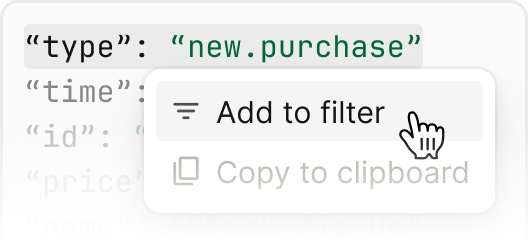
Quick filters let you click any value in the request or event details sidebar to instantly create a filter. This eliminates manually constructing filters. Click on a customer ID, event type, or any payload value to narrow your search.
The Filters design update provides a more compact interface for viewing and managing multiple active filters.
CLI v1.3.0: Local Project Pinning
CLI v1.3.0 adds the --local flag for the hookdeck project use command. This creates a local config that pins the current directory to a specific Hookdeck Event Gateway project without affecting your global CLI configuration.
# Pin the current directory to "my-staging-project"
hookdeck project use my-staging-project --local
GCP Service Account Authentication
GCP Service Account authentication enables delivering events to Google Cloud destinations like Pub/Sub and BigQuery. The OAuth2 flow is handled automatically: generating signed JWTs from service account credentials, exchanging them for access tokens, and caching tokens for one hour with automatic refresh.
Configure with your service account JSON key and destination URL. For Pub/Sub topics:
https://pubsub.googleapis.com/v1/projects/{PROJECT_ID}/topics/{TOPIC}:publish
Custom OAuth scopes are supported, defaulting to cloud-platform with options for more restrictive permissions like pubsub or bigquery. For BigQuery, webhook data is automatically formatted for the insertAll API endpoint.
Configure GCP authentication →
Expanded Source Type Support
November added three new source types:
- Chargebee Billing: Built-in webhook verification and basic authentication support
- Lithic: Card issuing platform with HMAC-SHA256 signature verification
- Flexport: Logistics and supply chain with configurable HMAC support (SHA1 and SHA256)
Chargebee Integration Guides
Two new guides cover Chargebee Billing webhook integration:
The getting started guide covers webhook setup through production deployment, including webhook registration and basic authentication.
The local development guide covers CLI workflows for local development, including interactive mode debugging and building test event libraries with bookmarks.
Outpost v0.8.0 & v0.9.0: Standards Support & Infrastructure Control
Outpost saw two releases in November adding Standard Webhooks support and enhanced infrastructure management.
Standard Webhooks Implementation
Version 0.8.0 introduces full Standard Webhooks support. Webhooks delivered through Outpost now use the webhook- header prefix and whsec_ secret format, compatible with official Standard Webhooks SDKs.
The release adds configurable ID generation with support for UUID v4, UUID v7, or nanoid algorithms. Configure entity-specific prefixes like evt_, dst_, and dlv_:
# Configure custom ID prefixes
ENTITY_ID_PREFIX_EVENT=evt_
ENTITY_ID_PREFIX_DESTINATION=dst_
ENTITY_ID_PREFIX_DELIVERY=dlv_
Custom retry schedules let you define specific retry delays instead of relying solely on exponential backoff:
# Custom retry schedule: 5 seconds, 1 minute, 10 minutes, 1 hour
RETRY_SCHEDULE=5,60,600,3600
Enhanced Infrastructure Management
Version 0.9.0 adds improved health checks and infrastructure control. The health check endpoint returns structured JSON with individual worker status:
{
  "status": "healthy",
  "workers": {
    "delivery": "healthy",
    "retry": "healthy",
    "cleanup": "healthy"
  }
}
The MQS_AUTO_PROVISION environment variable gives operators control over message queue infrastructure. The publish endpoint now includes a duplicate field in responses, distinguishing between new events and those deduplicated via idempotency keys.
That's it for the November 2025 review.
Don't forget to join our Slack community or get in touch if you'd like to share your story of using Hookdeck or if you have any questions.